Ingredients
Equipment
Method
- First, prepare the chicken by placing each breast on a cutting board. Then, slice horizontally to create thinner cutlets if they are thick. Alternatively, gently pound them to about 1.5 cm thickness. This ensures even cooking and prevents dry spots.
- Next, pat each chicken piece dry using paper towels. This step is essential because moisture prevents proper browning. Once dry, set the chicken aside briefly.
- Then, combine the almond flour, salt, and pepper on a wide plate. Stir thoroughly so the seasoning distributes evenly throughout the flour.
- After that, press each chicken cutlet into the almond flour mixture. Turn and press gently to coat both sides. Shake off any excess coating. Place the coated chicken on a clean plate.
- Meanwhile, heat 1 tablespoon butter and 1 tablespoon olive oil in a large skillet over medium-high heat. Allow the butter to melt completely and begin to foam slightly.
- Once the fat is hot, carefully place half of the chicken into the skillet. Do not overcrowd the pan. Leave space between pieces to allow proper browning.
- Then, cook the chicken undisturbed for about 3 minutes. You should see a golden crust forming. Flip gently using tongs.
- Next, cook the second side for another 2 to 3 minutes. The chicken should be fully cooked and lightly golden. Transfer it to a clean plate.
- After that, repeat with the remaining butter, olive oil, and chicken. Adjust heat if needed to prevent burning.
- Once all chicken is cooked, reduce the heat to medium. Add the remaining tablespoon of butter to the skillet.
- Then, add the diced shallot. Stir continuously for about 2 minutes until softened and fragrant.
- Next, add the minced garlic. Cook briefly for about 30 seconds. Stir constantly to prevent burning.
- Slowly pour in the white wine or broth. Then, increase heat slightly and bring the liquid to a gentle boil. Use a wooden spoon to scrape any browned bits from the bottom of the pan.
- Allow the liquid to reduce by about half. This takes approximately 4 to 5 minutes. The sauce should begin to thicken slightly.
- After that, add the fresh lemon juice and capers. Stir to combine evenly.
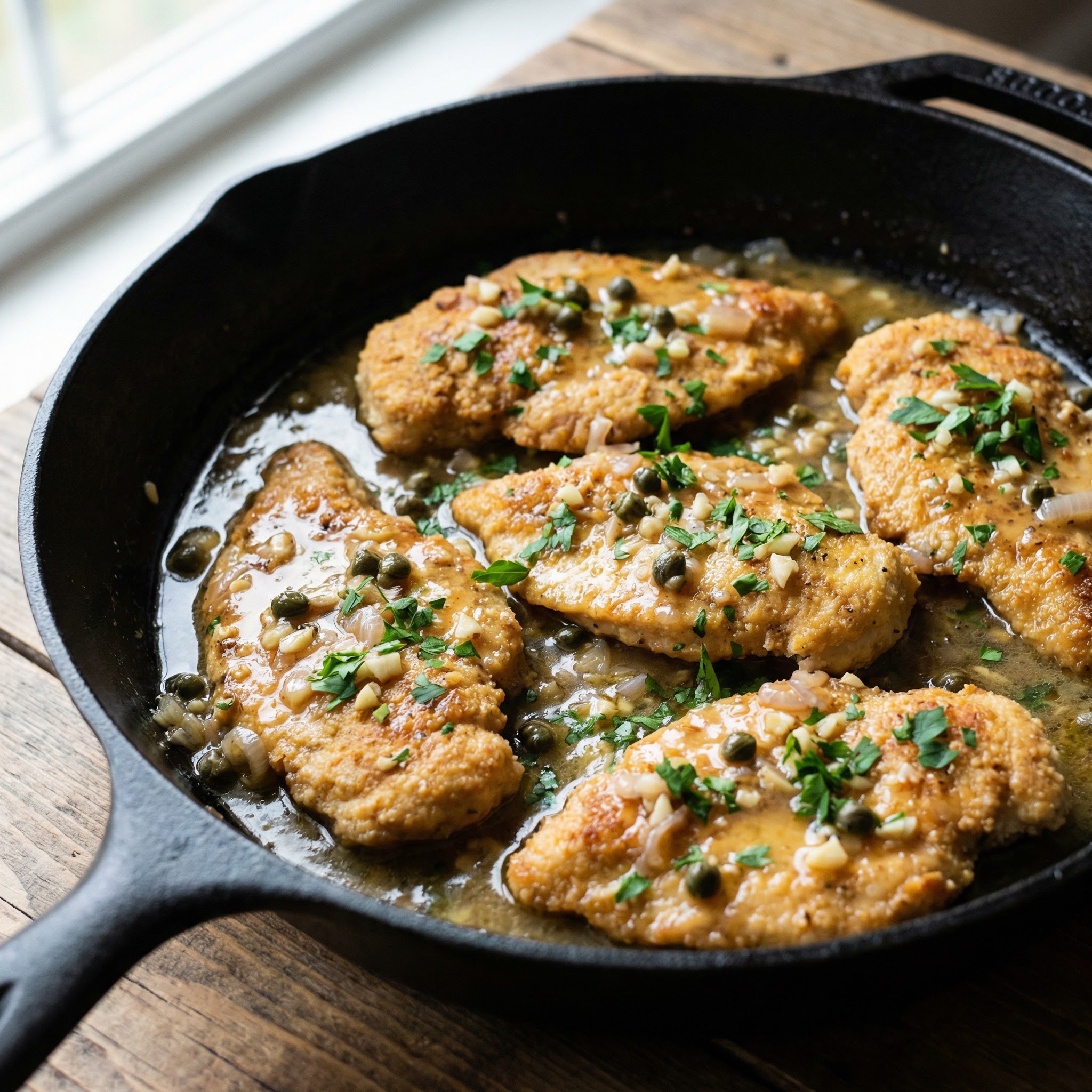
- Then, return the cooked chicken and its juices to the skillet. Spoon the sauce over the chicken.
- Allow everything to simmer for 2 to 3 minutes so the flavors blend and the chicken reheats fully.
- Finally, sprinkle with freshly chopped parsley before serving. Spoon additional sauce over each portion.
Notes
Slice chicken evenly for uniform cooking. If pieces vary in thickness, gently pound them until even. Fresh lemon juice provides the best flavor. Avoid bottled juice if possible. Almond flour creates a delicate coating, so handle gently when flipping. Dry the chicken before dredging to help the coating stick properly.