Low Carb Buffalo Chicken That Changed My Weeknight Cooking Forever
The first time I made low carb buffalo chicken, it was not part of some grand dinner plan. Instead, it happened on a rainy Thursday evening when I stood in my kitchen, hungry, tired, and craving something comforting but not heavy. Outside, the windows fogged from the cold air pressing against the warm glass. Inside, my kitchen carried the faint scent of garlic from earlier in the day. I remember opening the refrigerator, staring at the chicken tenders I had bought without a clear plan, and feeling that familiar tug toward something spicy.
At that moment, buffalo chicken felt like the obvious answer. However, I did not want the heaviness that usually comes with traditional breading. I wanted the flavor, the crunch, the heat, and the satisfaction, but without the carb overload that left me sluggish afterward. That night, I began experimenting with low carb coatings, simple ingredients, and techniques that focused on texture and flavor rather than flour.
As the chicken cooked, the sound alone made me hopeful. First came the quiet sizzle, then the steady bubbling of hot oil, and finally the deeper crackling that signals something crisp forming on the outside. Meanwhile, I prepared the buffalo sauce, watching butter melt into hot sauce, turning glossy and smooth. The smell filled the air immediately. It was sharp, tangy, rich, and slightly spicy, and it pulled me closer to the stove like a magnet.
When I finally tossed the crispy chicken into the sauce, I knew something special had happened. The coating stayed intact. The sauce clung to every surface. Most importantly, the first bite delivered everything I had hoped for. The exterior cracked gently between my teeth, while the inside remained tender and juicy. The heat built slowly, then lingered just enough to make the next bite irresistible.
Since then, low carb buffalo chicken has become more than just a recipe in my kitchen. It has become a reliable solution on busy nights, a favorite for casual gatherings, and sometimes even a quiet reward after a long day. Over time, I refined every detail. I learned how the coating behaves, how the sauce balances, and how small adjustments make a noticeable difference. Each time I make it, I still feel that same excitement I felt on that rainy evening.
Why Low Carb Buffalo Chicken Works So Well
At first, I assumed removing traditional flour would mean sacrificing texture. However, I quickly discovered that the right combination of ingredients creates something even better. Instead of a heavy crust, the coating forms a delicate, crisp layer that enhances the chicken without overwhelming it.
Almond flour plays a major role here. Unlike wheat flour, it creates a lighter texture that crisps beautifully when cooked properly. Meanwhile, finely grated parmesan adds both flavor and structure. As it heats, the cheese helps form that golden surface that makes each bite so satisfying. Together, they create a coating that feels intentional rather than like a compromise.
Equally important, the buffalo sauce brings everything together. The balance of heat, acidity, and richness transforms simple chicken into something memorable. Butter softens the sharpness of the hot sauce, while garlic adds depth. Vinegar brightens the flavor and keeps it from feeling heavy. As a result, every element complements the others.
Over time, I noticed something else. This low carb version actually lets the chicken shine more clearly. Traditional breading can sometimes dominate the bite, but here, the focus stays where it belongs. The chicken remains juicy and flavorful, while the coating and sauce enhance rather than mask it.
In addition, this recipe adapts easily to different cooking methods. Whether I use the stovetop or air fryer, the result stays consistently delicious. That flexibility makes it easier to prepare on any day, regardless of time or energy level.
The Sensory Experience of Making Low Carb Buffalo Chicken
Cooking is not just about taste. It is about sound, smell, and texture, and this recipe delivers on all fronts. First, the preparation itself feels satisfying. Dipping the chicken into the egg creates a glossy surface, and then pressing it into the coating gives it that slightly grainy, promising texture.
As soon as the chicken hits the hot oil or air fryer, everything changes. The quiet kitchen fills with sound. Gentle sizzling grows into steady crackling, and that sound signals progress. Meanwhile, the smell begins to develop slowly. At first, it is subtle. Then, the aroma deepens into something rich and savory.
When I prepare the sauce, the transformation happens quickly. Butter melts, garlic softens, and hot sauce turns silky. The scent becomes bold and unmistakable. It is the kind of smell that draws people into the kitchen without explanation.
Finally, tossing the chicken in the sauce becomes the most satisfying step. The crisp pieces turn glossy and vibrant. The coating absorbs just enough sauce while keeping its texture intact. That moment always reminds me why this recipe works so well.
My Personal Journey Perfecting Low Carb Buffalo Chicken
Initially, my early attempts were not perfect. Sometimes the coating fell off. Other times, the chicken lacked that deep crispness I wanted. However, each attempt taught me something valuable.
For example, I learned that pressing the coating firmly onto the chicken makes a noticeable difference. Without that extra step, the crust does not adhere as well. In addition, maintaining the correct cooking temperature ensures consistent results. Too low, and the coating becomes soft. Too high, and it darkens too quickly.
I also discovered that letting the chicken rest briefly after cooking helps preserve the texture. During that short pause, the coating settles and firms up. As a result, it holds the sauce better when tossed.
Over time, I became more confident. Now, I recognize the visual cues. I know when the coating looks right, when the oil is ready, and when the chicken has reached that perfect golden color.
How Low Carb Buffalo Chicken Fits Into Everyday Cooking
One of the reasons this recipe became a staple is its versatility. Sometimes I serve it as a main dish with a simple salad. Other times, I prepare it as an appetizer when friends visit. Either way, it always disappears quickly.
It also pairs beautifully with other low carb favorites. For instance, I often make Keto Loaded Cauliflower Soup alongside it. The creamy soup balances the heat of the buffalo chicken perfectly. Meanwhile, on busier days, I prepare Cheesy Chicken Fritters as part of a larger spread. Together, they create a satisfying and varied meal.
Because the recipe cooks relatively quickly, it fits easily into weeknight routines. Even after a long day, I know I can rely on it without stress.
Tested Tips & Common Mistakes for Low Carb Buffalo Chicken
Through repeated testing, I learned several small details that improve the final result. First, always use finely grated parmesan instead of coarse shreds. Fine parmesan blends better with almond flour and creates a smoother, more even coating.
Second, make sure the chicken is dry before dipping it into the egg. Excess moisture prevents the coating from sticking properly. Patting the chicken dry takes only a moment, but it makes a noticeable difference.
Third, avoid overcrowding the pan or air fryer. When pieces sit too close together, steam builds up and softens the coating. Giving each piece space allows heat to circulate evenly.
One common mistake is tossing the chicken in sauce too early. If the chicken is extremely hot, the coating may soften quickly. Letting it rest briefly helps preserve crispness.
Another mistake involves cooking temperature. If the oil is not hot enough, the coating absorbs oil instead of crisping. Always allow the oil to reach the proper temperature before cooking.
Why I Keep Coming Back to Low Carb Buffalo Chicken
There is something deeply satisfying about recipes that deliver consistent results. This low carb buffalo chicken does exactly that. Every time I make it, the process feels familiar and rewarding.
The smell fills the kitchen. The sound signals progress. The texture delivers satisfaction. Most importantly, the flavor never disappoints.
Even now, I still pause before taking the first bite. That moment always reminds me why simple ingredients, handled carefully, can create something truly special.
And somehow, it all traces back to that rainy Thursday evening, when a simple craving turned into one of my most trusted recipes.
Nutrition Information (per serving):
-
Calories: 420
-
Total Carbs: 5g
-
Net Carbs: 3g
-
Protein: 32g
-
Fat: 30g
Values are estimates.
Frequently Asked Questions:
Can I use chicken breast instead of tenders?
Yes. However, slice the chicken breast into even strips to ensure consistent cooking. Thick pieces take longer and may cook unevenly.
Can I make this in advance?
Yes. Cook the chicken and store separately from the sauce. Then reheat in an air fryer before tossing in fresh sauce for best texture.
Why did my coating fall off?
This usually happens when the chicken is too wet or not pressed firmly into the coating. Pat the chicken dry first and press the coating well.
Can I freeze low carb buffalo chicken?
Yes. Freeze cooked chicken without sauce. Then reheat in the oven or air fryer and toss in fresh sauce afterward.
What is the best oil for frying?
Avocado oil works best because of its high smoke point and neutral flavor. It allows the coating to crisp without burning.
Can I make it less spicy?
Yes. Reduce the hot sauce slightly and add more butter. This adjustment softens the heat while preserving flavor.
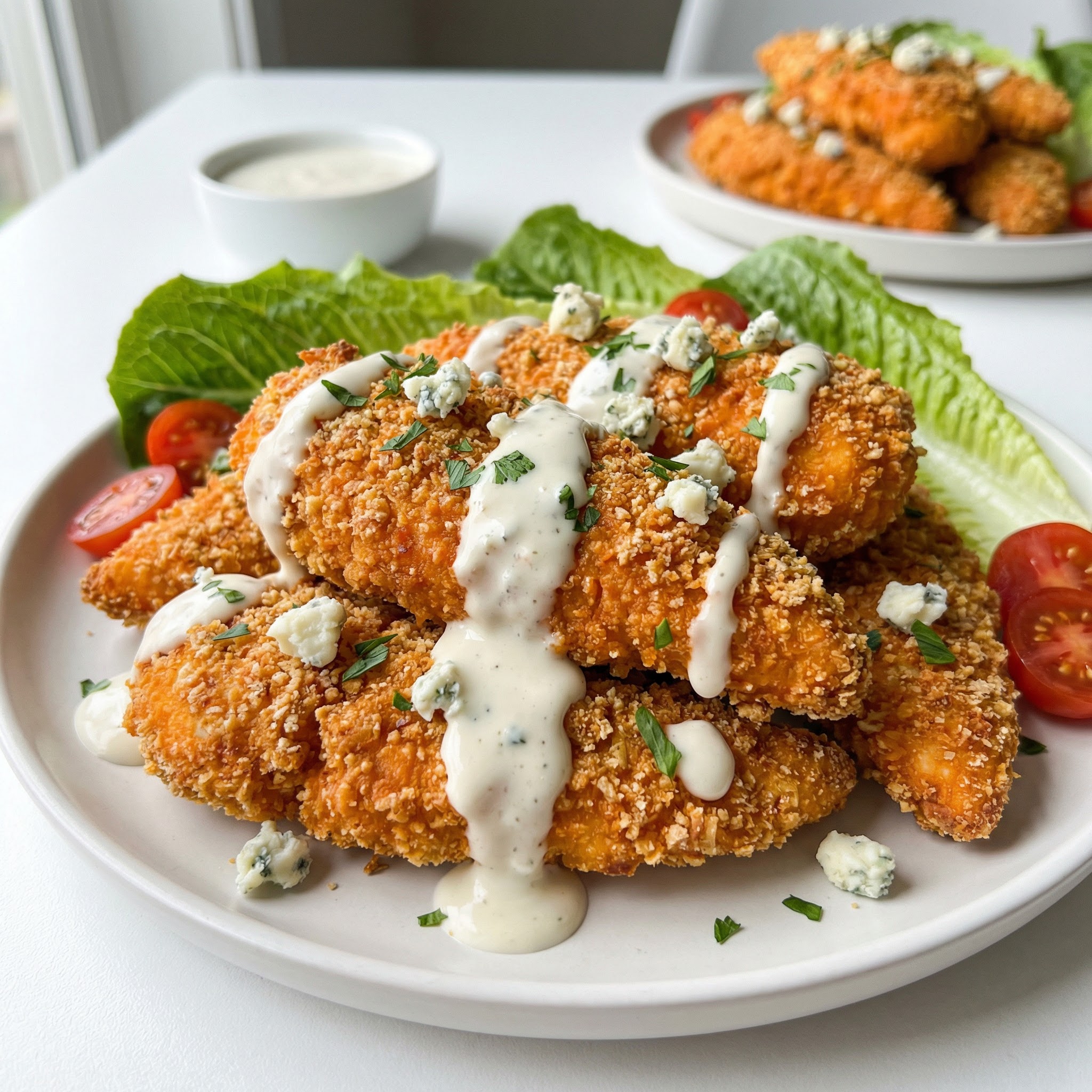
Low Carb Buffalo Chicken
Ingredients
Equipment
Method
- First, remove the chicken tenders from the refrigerator and pat them dry thoroughly using paper towels. This step improves coating adhesion and helps achieve a crisp exterior. Meanwhile, prepare a shallow bowl and combine almond flour, finely grated parmesan, smoked paprika, cayenne pepper, salt, and black pepper. Mix until evenly blended and uniform in texture.
- Next, crack the eggs into a separate bowl. Then whisk them thoroughly until the yolks and whites combine completely. The egg mixture should appear smooth and slightly frothy, which helps the coating stick evenly.
- Now, dip each chicken tender into the egg mixture. Ensure the entire surface is coated. After that, transfer the chicken into the almond flour mixture. Press firmly on all sides so the coating adheres securely. Place coated chicken on a plate and repeat with remaining pieces.
- Stovetop method:
- First, pour avocado oil into a deep skillet until it reaches about 2 inches in depth. Then heat the oil over medium heat until it reaches approximately 375°F or 190°C. Carefully lower each chicken tender into the hot oil. Avoid overcrowding the skillet to maintain temperature.
- Next, cook the chicken for about 4 to 5 minutes per side. Watch for a deep golden color and steady bubbling. After turning once, continue cooking until both sides are crisp and the internal temperature reaches 165°F or 74°C.
- Then, transfer cooked chicken to a plate lined with paper towels. Allow excess oil to drain and let the coating firm up for about 2 minutes.
- Air fryer method:
- First, preheat the air fryer to 400°F or 200°C. Lightly spray the basket with avocado oil. Arrange chicken tenders in a single layer without overlap. Spray the tops lightly with oil.
- Next, cook for 8 minutes. Then flip each piece carefully. Continue cooking another 6 to 8 minutes until crisp and golden.
- Meanwhile, place hot sauce, butter, vinegar, garlic, and salt into a small saucepan. Heat over low heat. Stir continuously until butter melts completely and the sauce becomes smooth and glossy.
- Finally, place cooked chicken into a bowl. Pour warm buffalo sauce over the chicken. Toss gently until evenly coated. Serve immediately with blue cheese dressing and crumbles.